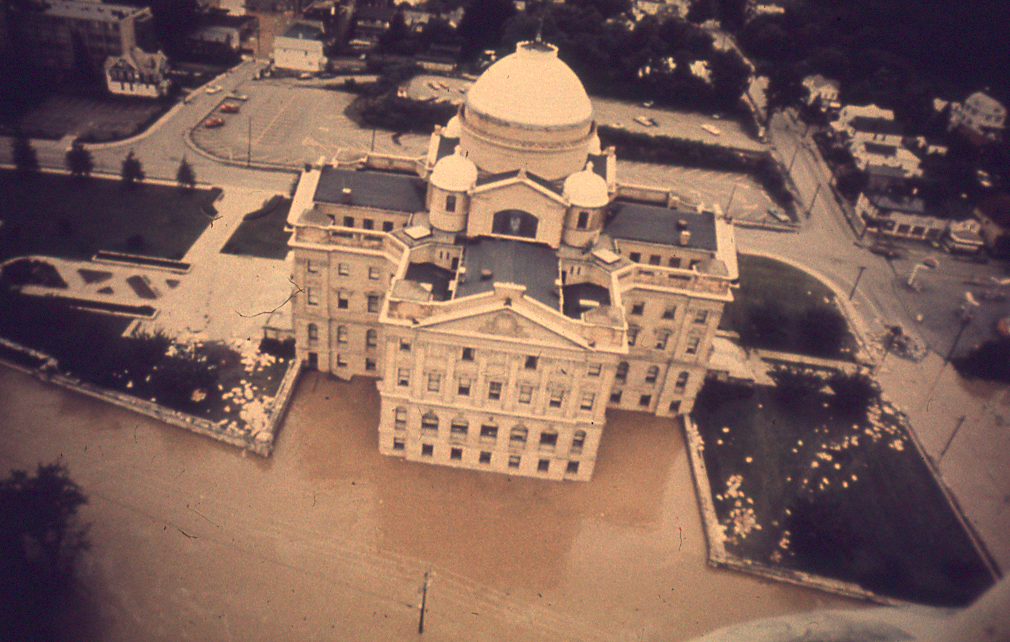
For most people, the title “THE GREAT FLOOD” would remind them of the story from the book of Genesis when Noah and his family were told by God to build an ark to escape their great flood. Today, the great flood is a reminder of an event in my life and thousands of people in the area of Wilkes-Barre, Pa. that changed the whole landscape of a community.
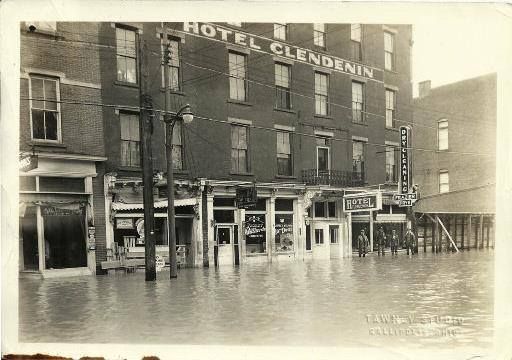
As a child, I grew up just four blocks away from the Ohio River. Though I never experienced flooding, my parents could relate to the fact that the river had overflown its banks several times in their lifetime. For me, it was just something that happened to them. But, in 1972, I was suddenly introduced to the devastation of the flooding of the whole Wyoming Valley where we had lived since 1968. The memories are vivid in my mind today because each year, newspapers and local television channels show photos of a frightening and horrible experience for many of our friends and ourselves.
Jason, our third son, was just three weeks old when Ros and I, my two sons, Erik and Nathan, went to visit my Mother in Gallipolis, Ohio. It was our intention to visit with her, to share with her our newest child, and then went to be with my youngest sister Betty and her husband George in Bay Village, Ohio. The trip was rather uneventful. But, one evening as we were sitting in front of the black/while television news, the events of the Susquehanna River’s rising and overflowing into the whole downtown area of Wilkes-Barre, Pa. hit me so hard. What about our home that we had just purchased in 1969? What about Wilkes College which was so close to the river? Would we have any income if the college could not open for the fall semester and Ros would not be able to teach? What about the church that we attended? Was that ruined?
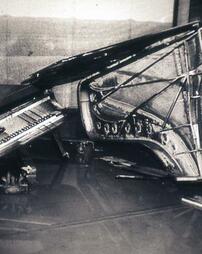
The stories that were reported caused me to shake and I began to cry out ot fear. All of the roads were closed that would have allowed us to come home, so we stayed much longer with my sister. Our money supply was so low and I realized that we were going to rely too much on George and Betty. Finally, Ros decided he would travel back to northeastern Pa. by himself to know what we would have to face. He had to go out of his way to find a telephone that was working when he got to our area. He took detours to our home and our home had been flooded but the water had stopped just below the kitchen. Everything in our basement was ruined–all of my books, all of my high school and college memories, our piano, etc., but it was possible for us to return to our home where the children could have their own rooms. Ros drove back to Ohio. We thanked my sister and George and made our journey home.
The story of the recovery from the disaster would be too long to relate. Some of the highlights are these:
When the water was finally removed from our basement, I had already contracted a group to clean, and reconstruct the basement for use by August. Immediately, we had to have a washer/dryer. Three children under the age of five years old! That was a necessity. Then we felt that we needed to replace our piano. Music was essential for our family!
We learned to expect that we plus everyone else around us would rely on charity stamps from the government–travel by bus, groceries, and frankly, I remember that we were covered with dirt all the time. There was no water supply, no gas, no electricity.
In the middle of all the stress, I had an extensive urinary tract infection which was not diagnosed by my gyn doctor because his office had been flooded. Finally, I found another doctor that knew how to help me.
Ros had to go to Wilkes College to help clean the music building for the fall semester. Did I feel angry to be left with the task of most of the clean-up and caring for three children at the same time? Yes, but there was no choice. He did get remunerated for his time. Luckily, the students came back to a clean building.
When I remember those days, the summer of 1972, I wonder how I was able to survive it. Yet, we were lucky in comparison to many people who lost their whole homes, all their belongings, and had to live in trailers for over a year. Our children did not get sick even though they played outdoors where there must have been dangers of chemicals from the water debris that had been on our grass.
Jason was baptized in our church that was damp and had a smell of mold. We learned to live modestly, and gradually the GREAT FLOOD of 1972 would become a memory. When we are expected to deal with extreme difficulties we often mature and realize that we are capable of more than we feel we can endure. It has been 53 years ago. The experience is still vivid in my mind, but again, I thank God for His strength and love!